
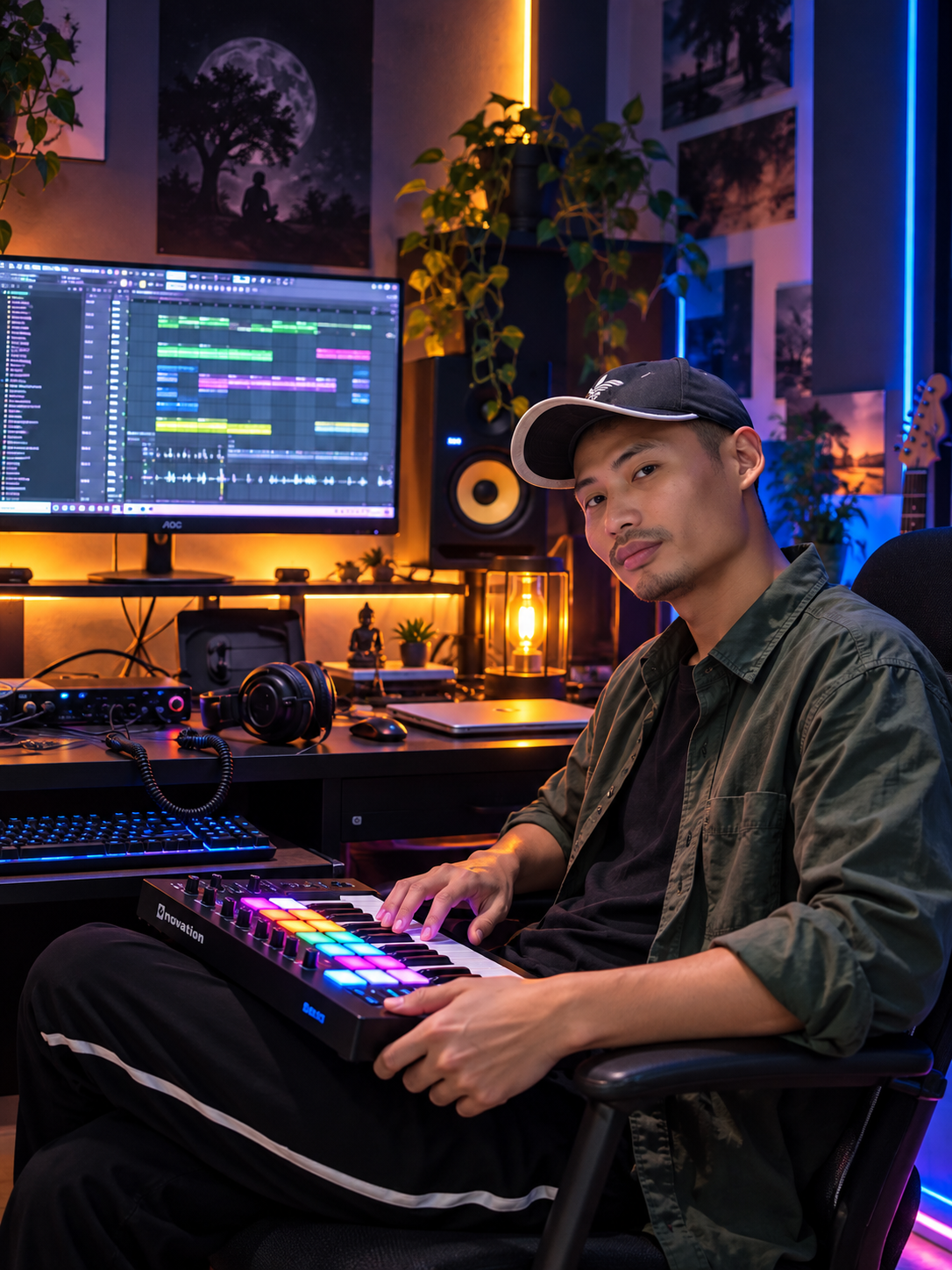
BURNT HOUSE / MUSIC PRODUCTION / CAREER GUIDE
Becoming a music producer is not about owning the most expensive equipment or knowing every plug-in. It is about developing the musical judgement, technical skills and collaborative habits needed to turn ideas into finished records. There is no single route into the job, but there are practical steps that make progress much more likely.
Understand what a producer actually does
A producer may help write a song, build the instrumental, shape the arrangement, direct performances, design sounds, record vocals, edit, mix or coordinate the people involved. Some producers specialise in beats and electronic production; others work with bands, singers, composers or artists developing a full project. Decide which kind of work interests you, but stay curious about the wider process.
Build the foundations before chasing gear
- Musical listening: learn to hear rhythm, harmony, melody, arrangement, dynamics and tone.
- Rhythm: program and perform grooves in several styles. Understand swing, syncopation, velocity and the space between notes.
- Harmony: learn basic chord construction, inversions, bass movement and how harmony supports a melody.
- Sound: understand oscillators, samples, envelopes, filters, modulation, effects and resampling.
- Recording: learn gain staging, microphone placement, signal flow, latency and file management.
- Mixing: learn balance, EQ, compression, space, stereo, automation and translation across playback systems.
Choose one DAW and learn it properly
Choose a digital audio workstation that suits the way you think and make music. Learn how to record, edit, arrange, route, automate, export and recover a session before constantly changing software. A reliable workflow gives you more time to make decisions about music.
If you use Cubase, start with our Cubase Pro 16 review, setup guide and session-template guide.
Finish music, not just loops
Make short exercises, but also practise completing full arrangements. A finished track teaches you about transitions, energy, contrast, editing, mix decisions and the compromises required to reach an ending. Set a deadline and export a version even when you know it could be improved.
Our guide to turning an eight-bar loop into a complete song is a practical place to start.
Develop a recognisable point of view
Your sound develops through listening, experimentation and choices repeated over time. Study music you love, but identify what you are learning from it: rhythm, arrangement, texture, vocal treatment or emotional contrast. Then change the context and make something of your own.
Try building a track with a limited set of sounds, recording an unusual source, changing the tempo of a familiar groove or combining two influences that do not normally meet. Our articles on building a recognisable identity across genres and turning everyday sounds into instruments explore these ideas.
Collaborate and learn to communicate
Work with singers, instrumentalists, songwriters, filmmakers and other producers. Learn how to explain an idea without making someone feel that their contribution is being dismissed. Agree roles, splits, deadlines and ownership before a release. Keep session files and credits organised.
Build a portfolio that shows what you can do
Choose a small number of finished tracks that demonstrate different strengths. Make it easy to hear your work, understand your role and contact you. A portfolio can include released music, private examples, before-and-after production work and collaborations, as long as you have permission to share them.
Understand the business side
Learn the difference between master ownership, songwriting shares, producer agreements, royalties, fees and licensing. Do not rely on verbal assumptions when money or rights are involved. Our music royalties guide explains the main income routes, while the independent musician guide covers the wider career picture.
A practical 90-day starting plan
- Weeks 1–2: choose a DAW, organise your setup and identify the musical skills you need to improve.
- Weeks 3–4: recreate short production exercises from reference tracks, focusing on one element at a time.
- Weeks 5–8: finish two original tracks with complete arrangements and basic mixes.
- Weeks 9–10: collaborate with another musician or vocalist and document the process.
- Weeks 11–12: select your strongest work, prepare a simple portfolio and ask for specific feedback from people whose judgement you trust.
If you want to put those skills into practice with another artist, explore creative collaborations at Burnt House. Original music collaborations have no studio fee, with credits and release arrangements agreed before work begins.
The takeaway: a producer is someone who can make musical ideas happen. Learn the tools, listen deeply, finish work, collaborate well and build a body of music that demonstrates your judgement.