
BURNT HOUSE / DRUM MACHINES / SOUND HISTORY
The 808 is now shorthand for a whole family of bass sounds, but it began as one particular machine: a programmable analogue rhythm composer from Roland. Understanding the original instrument makes it easier to understand why its kick became so important — and how to recreate its character without simply loading another 808 sample.
Before the 808: what was Roland trying to build?
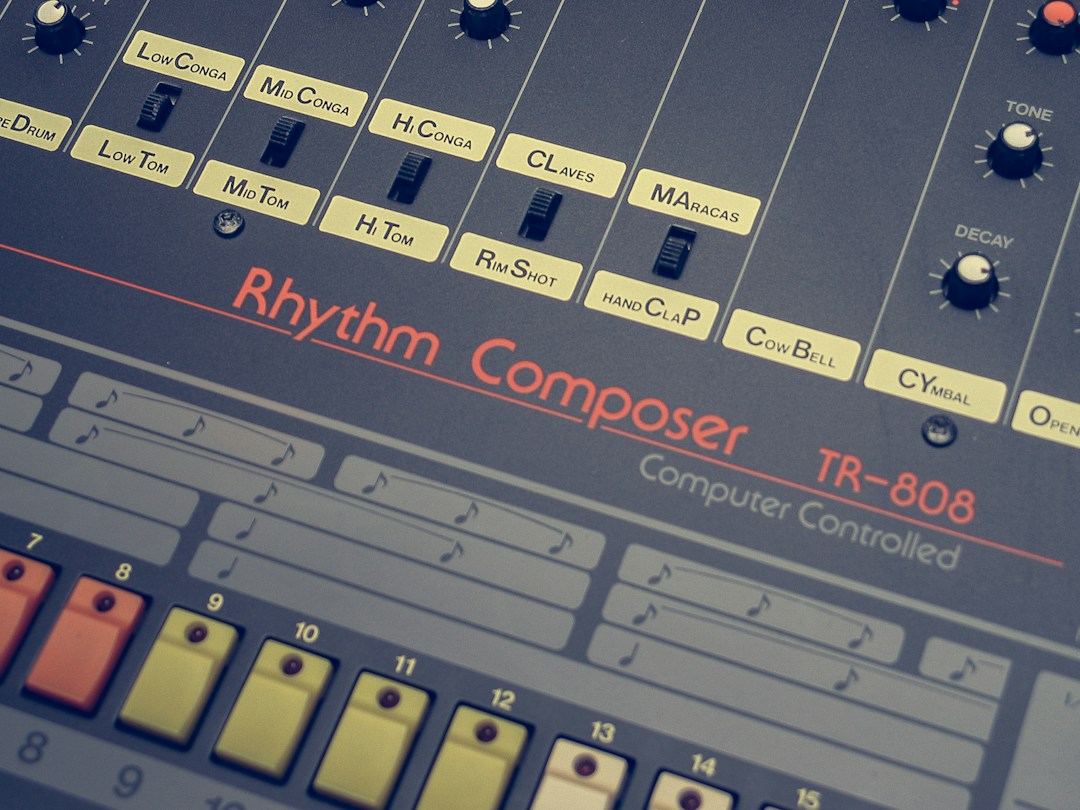
Roland introduced the TR-808 Rhythm Composer in 1980. The TR name stands for Transistor Rhythm. It was designed as a programmable rhythm machine at a time when many musicians wanted a practical way to create drum parts without recording a live drummer. Roland’s earlier CR-78, released in 1978, had already brought programmable pattern creation and storage into its CompuRhythm range.
The TR-808’s sounds were generated by analogue circuits rather than playback of recordings of real drums. That distinction matters. The machine was not trying to reproduce a perfect acoustic kick or snare. It created its own electronic percussion voices, each with controls that let the player shape the result.
Why the original 808 sounded different
The bass drum circuit is the heart of the legend. Its Tone and Decay controls let users move from a short, punchy kick to a longer, lower sound with a resonant tail. Turn the decay up and the kick begins to behave less like a conventional drum transient and more like a pitched bass instrument. That long low-frequency tail became one of the defining ingredients of the modern 808 bass sound.
The machine’s other voices are equally recognisable: snare, handclap, cowbell, toms, congas, rimshot, claves, maracas, cymbals and hi-hats. The analogue design gives these sounds a particular character, and the ability to program patterns with the TR-REC step sequencer made it possible to build grooves that were repeatable but still highly personal.
Why it initially struggled — and why that helped its legacy
Roland’s TR-808 history page dates the production run from 1980 to 1982 and records around 12,000 units. There is a small date discrepancy in Roland’s own documentation: its technical-specifications page labels the TR-808 Rhythm Composer as 1981–1983. Rather than pretend the sources agree, we are noting the difference. At the time, some musicians preferred the more realistic sampled drum sounds of competing machines. The 808’s synthetic voices were not universally regarded as a convincing substitute for a real kit.
But those limitations became its identity. The machine was affordable compared with some alternatives, its sounds could be shaped, and its kick could reach unusually deep frequencies. Producers began using it for what it did uniquely well rather than what it was originally expected to imitate.
From drum machine to bass instrument
As producers experimented with longer kick decays, pitch and sampling, the bass drum became a playable low-frequency voice. The sound moved through electro, hip-hop, Miami bass, house, techno and later trap. Producers could tune the kick to a musical note, sample it, replay it chromatically and shape its envelope like a bass line.
That is the important production lesson: an 808 is not just a preset or a long kick sample. It is a relationship between pitch, envelope, harmonic content, rhythm and the space left by the rest of the arrangement.
How to build an 808-inspired kick today
- Start with the fundamental. Use a sine-like oscillator or a suitable analogue-style kick source. Keep the sub clean before adding distortion.
- Shape the pitch drop. A fast downward pitch envelope creates the initial knock. The depth and speed determine whether the sound feels like a kick or a laser-like effect.
- Set the decay musically. Shorten it for a punchy kick; lengthen it for a sustained bass note. Tune the tail to the key of the track.
- Add harmonics carefully. Saturation, soft clipping or controlled distortion can make the bass audible on smaller speakers. Keep an eye on the fundamental so the sound does not become all midrange.
- Separate the jobs. If the track needs both a sharp kick transient and a sustained 808 note, decide whether one sound can do both or whether a separate kick layer will give you more control.
- Check the result outside the studio. Listen quietly, in mono and on small speakers. The low end should remain intelligible without relying on excessive volume.
Try it in Serum 2 and Cubase
In Serum 2, build a sine-based sub, use a short pitch envelope for the initial attack, then shape the amplitude envelope for the required decay. Add a separate harmonic layer or use controlled distortion after the clean sub. Print a few versions to audio and compare them in the same arrangement.
In Cubase, use the Sampler Track or an instrument track to tune and arrange the sound. Keep the kick and sustained bass roles clear, check phase when layering, and automate decay or distortion only where the arrangement needs movement.
Our related guides cover designing a dark, distorted 808 in Serum 2 and mixing kick and 808 bass without low-end clashes.
The point is not to copy the machine — it is to understand the sound
The original TR-808 became influential because musicians found uses for its character that its designers could not have fully predicted. Recreating it is a useful exercise, but the bigger lesson is to understand the behaviour of the sound: how a short transient becomes a note, how pitch and decay create groove, and how harmonics let deep bass translate across playback systems.
Sources and further reading: Roland’s TR-808 story; Roland’s TR-808 technical specifications; Roland: Retracing the Roland Sound in Hip-Hop; Sweetwater: History of the Roland TR-808.
Featured photograph: Steve Harvey via Unsplash.
Make the 808 work in a real arrangement
Recreating the tone is only half the job. A convincing 808 part has to behave like a musical instrument inside the track. The same patch can sound huge in solo and disappear once the kick, bass instruments, vocal and master processing are playing. Work in context from the beginning.
1. Tune the body, not just the first click
The short pitch sweep at the beginning of a kick is perceived differently from the sustained low-frequency tail. Tune the tail to the musical note you need, then adjust the initial pitch movement for impact. If you tune only by the transient, the note can feel wrong once the sub sustains. Use a tuner or spectrum analyser as a guide, but finish by listening against the bass line and harmony.
2. Decide whether the kick and bass are one sound or two
A long 808 can provide both the transient and the bass note, but it may not deliver the tight punch required by a busy arrangement. If you layer a separate kick, decide which sound owns the first few milliseconds and which owns the sustained low end. Shorten one envelope, adjust the timing, and check the combined waveform and sound in mono. Two powerful low-frequency sounds playing the same role can create less impact, not more.
3. Distort the harmonics without destroying the sub
Distortion helps an 808 translate to phones, laptops and small speakers because it creates audible harmonics above the fundamental. It can also make the low end less stable if the entire signal is driven too hard. Try parallel saturation or a duplicated harmonic layer: keep the clean sub centred and controlled, then blend in the brighter, more aggressive layer. Compare the result at matched loudness so that the louder version does not automatically seem better.
4. Make the rhythm breathe
808 programming is not just about choosing notes. Note length, rests, slides, syncopation and the relationship to the kick and snare create the groove. A pattern that fills every gap can feel smaller than one that leaves space. Try shortening the final note of a bar, moving a pickup note ahead of the downbeat, or allowing a sustained note to cross the bar line only when it strengthens the phrase. Use slides as deliberate melodic gestures rather than adding them to every transition.
5. Control the envelope and release
Set note lengths and release times so overlapping MIDI notes do not create an uncontrolled low-frequency wash. In monophonic mode, test legato and glide behaviour deliberately. In polyphonic mode, overlapping notes may stack sub energy in ways that were not obvious when programming the pattern. If the part needs a clean hand-off between notes, shorten release or use a suitable monophonic voice mode.
A practical Serum 2 starting point
- Use a sine or rounded triangle-like source for the fundamental. Keep the oscillator level conservative and avoid unnecessary unison on the sub.
- Set a fast pitch envelope with a short decay. Adjust the depth until the transient has weight without becoming a cartoon laser.
- Shape the amp envelope around the phrase: a fast attack, a controlled decay and a release that does not blur the next note.
- Introduce a second oscillator or a separate noise/transient layer only if the sound needs more definition. High-pass or otherwise control the layer so it does not compete with the sub.
- Add distortion or saturation after the clean foundation. Compare different drive amounts at matched loudness and check the fundamental after processing.
- Use glide and portamento selectively. Tune the slide time to the tempo and the distance between notes; a fixed glide time will not feel equally musical for every interval.
- Save a clean version before experimenting. Print or bounce variations with different decay, pitch envelope and harmonic balance so you can compare them in the same section of the track.
Build a repeatable Cubase workflow
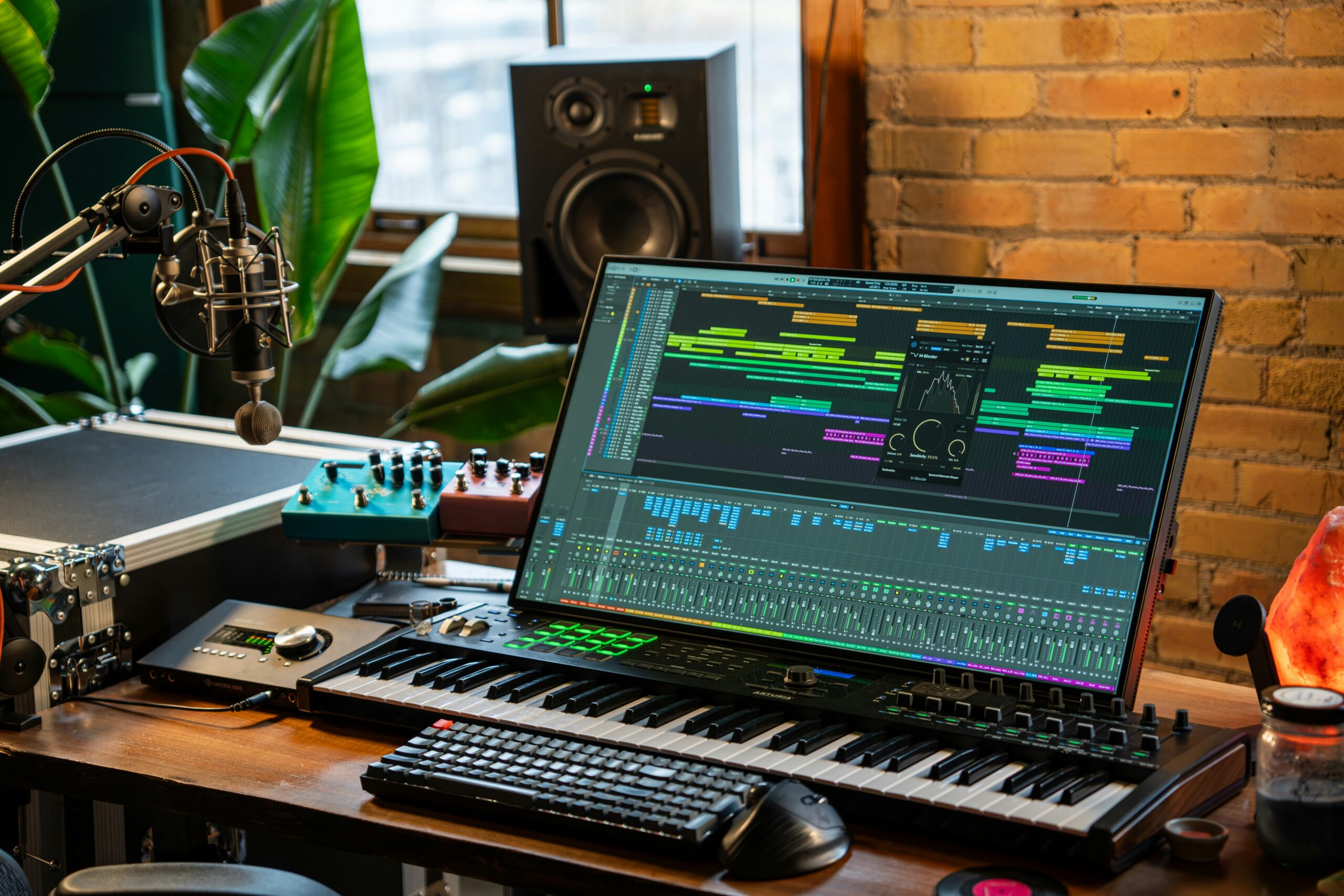
In Cubase, keep the MIDI pattern, the clean sub and any harmonic layer organised so you can change the performance without rebuilding the sound. Use the Sampler Track when you want to pitch and arrange a rendered kick sample, or keep Serum 2 on an instrument track when the sound needs slides, envelope changes or automation. Route related layers to a dedicated 808 group so you can control their combined level and processing.
For a layered kick and 808, check polarity and timing before reaching for EQ. A few milliseconds can change the low-frequency sum substantially. Listen in mono, compare the group with each layer muted in turn, and use a spectrum analyser to investigate problems rather than treating its display as the final decision. If the kick needs more attack, it may be better to shape the transient than to boost a broad high-frequency range on the entire bass part.

808 troubleshooting checklist
- The bass disappears on small speakers: add controlled harmonics, not simply more sub level.
- The kick loses impact: check whether the 808 tail is masking the transient; shorten or arrange the notes before over-processing.
- The low end changes dramatically in mono: inspect stereo processing, phase relationships and layered samples.
- Notes sound out of tune: check the sustained tail and the sample’s root pitch, not only the initial transient.
- The pattern feels crowded: remove notes, vary note lengths and create deliberate rests.
- Distortion makes the bass smaller: compare at matched loudness and preserve a clean low-frequency foundation.
The original TR-808 is a useful reference, but the goal is not to make every modern bass sound identical to a vintage circuit. Understand the relationship between pitch, envelope, harmonics and rhythm, then use those controls to make a bass part that belongs to the track. For the next step, read our dark distorted 808 Serum 2 guide and kick and 808 mixing guide.